Introduction-German Auto Exports
German industry (German Auto Exports) has long stood as a global symbol of engineering excellence, precision manufacturing, and export-driven growth. At the center of this reputation is the automotive sector, a pillar of Germany’s economy and one of its most powerful export engines. However, this dominance has been severely tested in recent years.
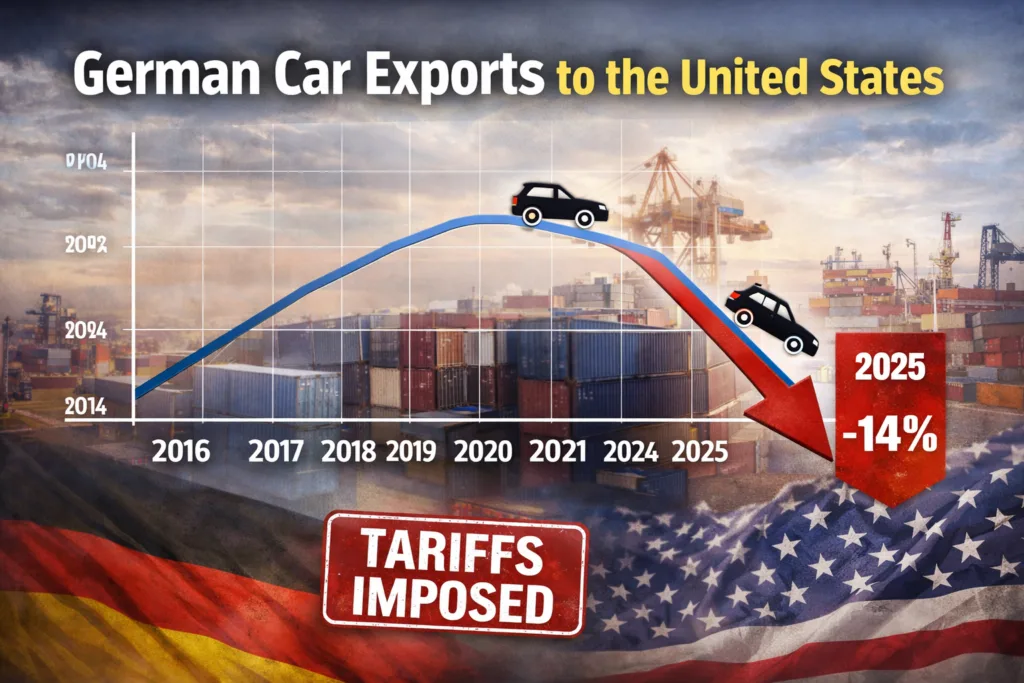
According to a study seen by Reuters, German car exports to the United States slumped by nearly 14% in the first three quarters of 2025, making automobiles the hardest-hit sector of German industry amid U.S. President Donald Trump’s trade war. This sharp decline marks a dramatic reversal from years of steady growth and signals a structural shift in transatlantic trade relations.
This blog post explores why German auto exports were hit hardest, how U.S. tariffs reshaped trade flows, the knock-on effects across other industries, and what this means for the future of German exporters.
Why the U.S. Market Matters So Much to German Automakers
The United States is Germany’s largest single export destination, and cars are among the most valuable goods shipped across the Atlantic. German brands such as BMW, Mercedes-Benz, Volkswagen, Audi, and Porsche enjoy strong brand loyalty among American consumers.
Between 2016 and 2024, German exports to the U.S. grew at an average rate of nearly 5%, reflecting stable demand and favorable trade conditions. This makes the sharp downturn in 2025 especially striking and economically painful.
Trump Tariffs and the Shift in Trade Policy-German Auto Exports
From Free Trade to Protectionism
The downturn in exports can be traced directly to the protectionist trade agenda pursued by President Donald Trump. Viewing trade deficits as a strategic weakness, the Trump administration targeted European imports—especially automobiles.
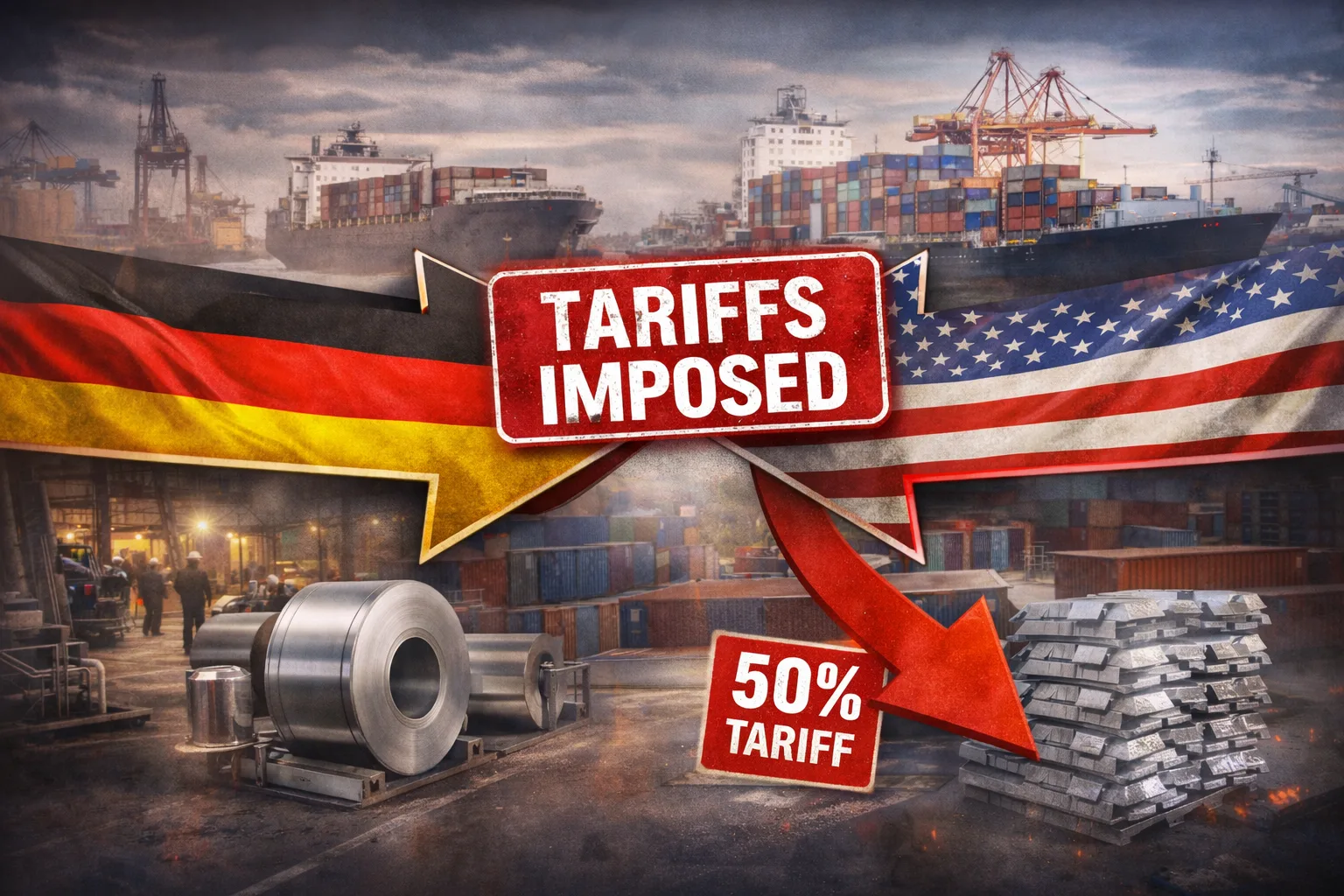
Initially, the U.S. threatened to impose a 25% tariff on European cars, in addition to an existing 2.5% duty. Although negotiations with the European Union resulted in a compromise, the final agreement still imposed a 15% baseline tariff on European cars, effective August 1.
While lower than the original proposal, the tariff represented a major escalation in trade barriers.
Why Automobiles Were Hit Harder Than Any Other Sector
1. Price Sensitivity
Cars are high-ticket consumer goods. A 15% tariff can add thousands of dollars to a vehicle’s price, pushing consumers toward cheaper domestic alternatives or non-European brands.
2. Limited Production Flexibility
German automakers rely on complex supply chains and specialized manufacturing processes that cannot be relocated quickly. Many premium and specialty models are still produced in Germany, making them especially vulnerable to export tariffs.
3. Political Symbolism
German cars were frequently cited by the Trump administration as evidence of unfair trade practices, making the automotive sector a symbolic and strategic target.
The Data: A Clear Decline-German Auto Exports
The study cited by Reuters highlights the severity of the downturn:
- German car exports to the U.S. fell nearly 14% in the first three quarters of 2025
- Automobiles became the worst-performing export sector
- Overall German exports to the U.S. declined by 7.8% year on year during the same period
The contrast with previous years of steady growth underscores the disruptive impact of tariffs.
Spillover Effects on Engineering and Machinery
Engineering Exports Down 9.5%
German engineering firms also struggled, with exports to the U.S. declining by 9.5% in the first nine months of 2025. Reduced demand from automakers compounded the direct impact of tariffs.
Machinery and Raw Material Tariffs
Machinery exports faced additional pressure due to a 50% U.S. tariff on steel and aluminium products, sharply increasing costs and reducing competitiveness.
The Chemical Industry: More Than Just Tariffs
The chemical sector recorded a 9.5% decline in exports to the U.S., but the study noted that tariffs were not the sole cause.
Other contributing factors included:
- Higher energy prices in Germany
- Reduced domestic chemical production
- Structural cost pressures
These factors combined to weaken export performance even further.
Energy Costs and Export Competitiveness
Rising energy prices have eroded the competitiveness of German manufacturers, particularly in energy-intensive industries. Higher production costs make it harder to absorb tariffs without raising prices, further dampening demand in export markets.
A Break from Past Trends-German Auto Exports
The contrast between past and present is stark:
- 2016–2024: Nearly 5% average annual export growth to the U.S.
- 2025: 7.8% overall decline, 14% drop in auto exports
This shift signals a structural change rather than a temporary setback.
The “New Normal” for German Exporters
Study author Samina Sultan described the situation as a “new normal,” warning that U.S. tariffs are unlikely to return to pre-Trump levels in the foreseeable future. As a result, a strong recovery in German exports to the U.S. appears unlikely.
This means German companies must adapt to permanently altered trade conditions.
How German Automakers Are Responding-German Auto Exports
To navigate the new environment, automakers are pursuing several strategies:
- Expanding production within the U.S. to avoid tariffs
- Diversifying export markets beyond North America
- Focusing on high-margin premium and electric vehicles
- Reworking global supply chains
These changes require time, capital, and long-term planning.
Conclusion-German Auto Exports
German auto exports were hit hardest by Trump-era tariffs due to their price sensitivity, political visibility, and deep reliance on the U.S. market. While other sectors also suffered, automobiles bore the brunt of the trade war’s impact.
As tariffs persist, German exporters face a future defined less by rapid recovery and more by strategic adaptation. The era of predictable transatlantic trade growth has ended, replaced by a new normal shaped by geopolitics, protectionism, and economic realignment.
For Germany’s automotive industry, success will depend on how effectively it can evolve in this more fragmented global trade landscape.
Frequently Asked Questions (FAQs)-German Auto Exports
1. Why were German auto exports hit hardest by Trump tariffs?
German auto exports were hit hardest because automobiles are high-value, price-sensitive products. The 15% U.S. tariff on European cars significantly increased vehicle prices in the American market, reducing demand. German cars were also a primary political target in the U.S. trade war, making the sector more vulnerable than others.
2. How much did German car exports to the U.S. decline?
According to a study seen by Reuters, German car exports to the United States fell by nearly 14% in the first three quarters of 2025. This made automobiles the worst-performing sector among all German exports to the U.S. during that period.
3. What tariffs did the U.S. impose on German cars?
Under an agreement between Washington and Brussels, the U.S. imposed a 15% baseline tariff on cars imported from Europe, effective August 1. This was lower than the initially threatened 25% tariff, but still far higher than pre-trade-war levels.
4. Did other German industries also suffer from U.S. tariffs?
Yes. Several other sectors were affected:
- Engineering exports to the U.S. declined by 9.5%
- Machinery exports faced a 50% tariff on steel and aluminium
- Chemical exports fell by 9.5%, influenced by tariffs and high energy costs
However, none experienced a decline as severe as the automotive sector.
5. Are tariffs the only reason for the decline in German exports?
No. While tariffs played a major role, other factors also contributed, including:
- Higher energy prices in Germany
- Reduced domestic production
- Rising global economic uncertainty
These factors particularly affected energy-intensive industries such as chemicals and heavy manufacturing.
6. How did German exports perform before the trade war?
Between 2016 and 2024, German exports to the U.S. grew at an average rate of nearly 5% per year. The sharp decline in 2025 represents a significant break from this long-term growth trend.
7. What does “new normal” mean for German exporters?
The “new normal” refers to the expectation that U.S. tariffs will not return to pre-Trump levels anytime soon. According to the study’s author, Samina Sultan, this makes a strong recovery in German exports to the U.S. unlikely in the foreseeable future.
8. How are German automakers responding to the tariffs?
German automakers are adapting by:
- Expanding production within the United States
- Diversifying export markets beyond North America
- Focusing on premium and electric vehicles
- Restructuring global supply chains
These strategies aim to reduce reliance on tariff-affected exports.
9. What does this mean for U.S.–Germany trade relations?
The tariffs have strained long-standing transatlantic trade relations and reduced trust between economic partners. While trade continues, it is now shaped more by protectionism and geopolitical risk than by free-trade principles.
10. Will German auto exports recover in the near future?
A significant recovery is considered unlikely unless U.S. tariff policies change. Most analysts expect German exporters to face structurally lower demand from the U.S. and to focus more on adaptation than rapid recovery.
Affiliate & Legal Disclaimer
This article relies on internal data, publicly available information, and other reliable sources. It may also include the authors’ personal views. However, it’s essential to note that the information is for general, educational, and awareness purposes only—it doesn’t disclose every material fact. This analysis is for informational purposes only and does not constitute financial advice. Consult a professional before making investment decisions. This article contains affiliate links from Amazon and ClickBank. If you purchase through these links, we may earn a commission—at no extra cost to you.
We publish information on World Virtual CFO in good faith, solely for general information. World Virtual CFO doesn’t guarantee the completeness, reliability, or accuracy of this information. These are our views for informational purposes. When you use our website, know that any action you take is entirely at your own risk. World Virtual CFO won’t be liable for any losses or damages connected to your use of our website. For detailed information, refer to our disclaimer page.

Dr. Dinesh Sharma is an award-winning CFO and AI strategist with over two decades of experience in financial leadership, digital transformation, and business optimization. As the founder of multiple niche platforms—including WorldVirtualCFO.com—he empowers professionals and organizations with strategic insights, system structuring, and innovative tools for sustainable growth. His blogs and e-books blend precision with vision, making complex financial and technological concepts accessible and actionable.