Cash Flow Management Strategies for Small Businesses Across the Globe in 2026 – Why It Matters Now
The financial landscape in 2026 demands a far more strategic approach to cash flow than in previous years. Rising interest rates across major economies have made borrowing more expensive, global inflation continues to pressure operating margins, and supply chain disruptions remain an ongoing risk. At the same time, digital payments and cross-border commerce have accelerated, making cash movement faster—but also more complex.
For small businesses, these conditions amplify risk. Unlike large corporations with access to capital markets and treasury teams, small enterprises often operate with limited buffers. A single delayed payment, unexpected tax obligation, or currency swing can create immediate liquidity stress.

This is where Cash Flow Management Strategies for Small Businesses Across the Globe in 2026 must be viewed through a virtual CFO lens. Cash flow is no longer just about tracking balances—it is about planning, forecasting, and making informed decisions that align daily operations with long-term strategy. At worldvirtualcfo.com, cash flow management is positioned as a leadership discipline, not merely an accounting function.
Understanding Modern Cash Flow–Cash Flow Management Strategies
Modern cash flow management starts with clarity. Cash flow is generally divided into three areas:
- Operating cash flow, which reflects cash generated from core business activities
- Investing cash flow, related to asset purchases or sales
- Financing cash flow, including loans, repayments, and equity injections
A critical issue virtual CFOs see repeatedly is the confusion between profit and cash. A business may appear profitable on its income statement while struggling to meet payroll because revenue is locked in unpaid invoices. Profit measures performance; cash determines survival.
In 2026, successful small businesses rely on real-time cash visibility. Cloud accounting platforms and banking integrations allow business owners and CFOs to monitor liquidity daily. This shift enables faster decisions, proactive risk management, and more confident planning in volatile environments.
Building Accurate Forecasts–Cash Flow Management Strategies
Forecasting is the foundation of strategic cash flow management. Annual budgets alone are no longer sufficient. Instead, virtual CFOs recommend rolling cash flow forecasts, updated monthly or even weekly.
Effective forecasts combine:
- Historical cash flow trends
- Current sales pipelines and contracts
- Known obligations such as payroll, rent, taxes, and debt service
Scenario planning is especially valuable in 2026. By modeling best-case, base-case, and worst-case scenarios, businesses can prepare contingency plans before problems arise. This approach transforms forecasting from a reporting exercise into a strategic decision-making tool.
Affordable platforms like QuickBooks, Xero, Zoho, and spreadsheet-based forecasting models make this achievable for businesses of all sizes, without excessive cost.
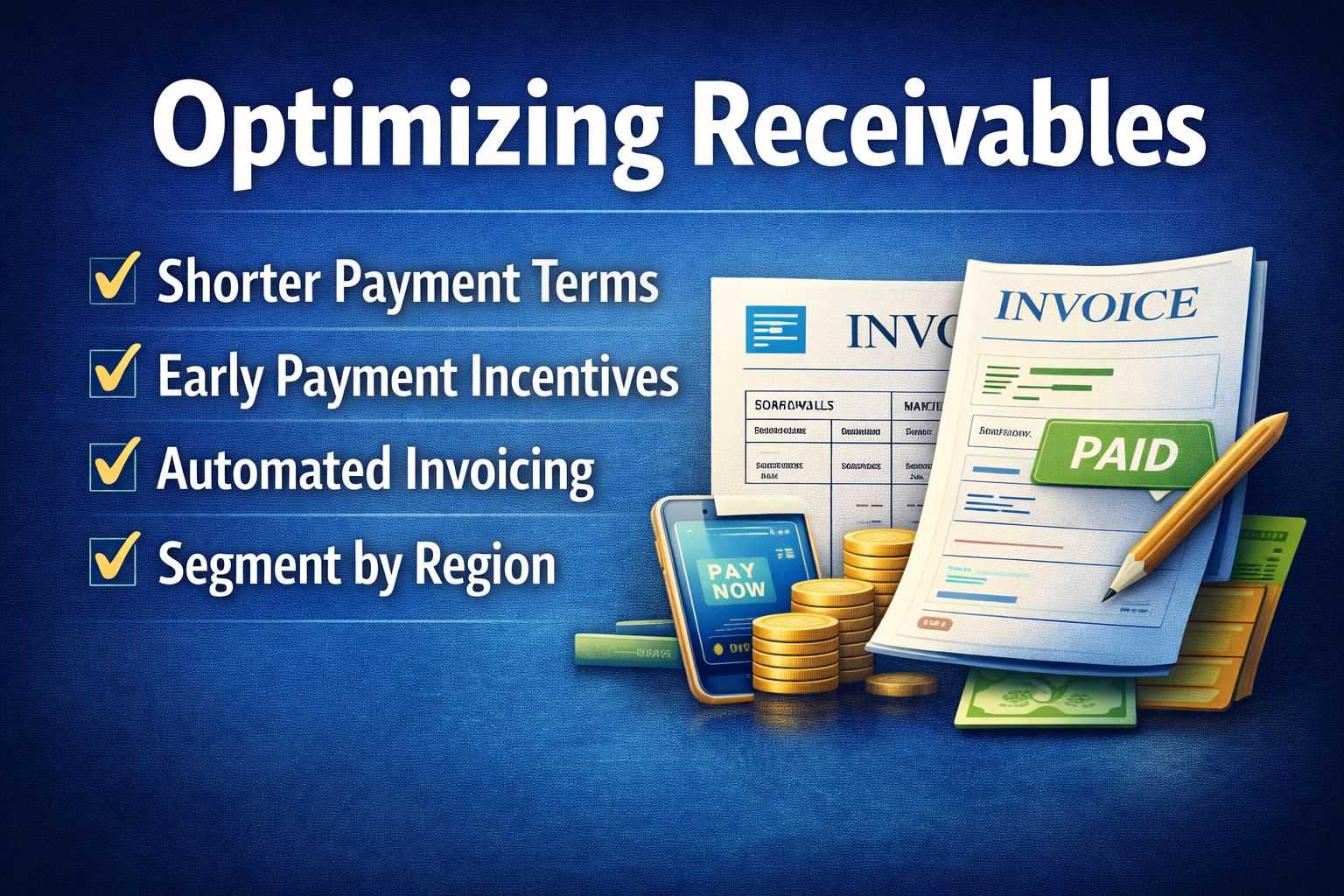
Optimizing Receivables–Cash Flow Management Strategies
Receivables management is one of the fastest levers for improving cash flow. Many small businesses focus on sales growth while overlooking how long it takes to collect cash.
Key optimization strategies include:
- Clearly defined payment terms communicated upfront
- Early payment incentives that improve liquidity without harming margins
- Automated invoicing and reminder systems
- Structured follow-ups for overdue accounts
Regional payment behavior plays a major role in 2026:
- North America and Europe favor cards, ACH, and open-banking payments
- Asia, Africa, and Latin America increasingly rely on mobile wallets, QR codes, and local payment gateways
Segmenting customers based on payment reliability allows businesses to focus collection efforts where risk is highest, improving predictability and cash discipline.
Controlling Payables Without Damaging Relationships
While accelerating inflows is important, managing outflows is equally critical. The goal is not to delay payments indiscriminately, but to align them with cash availability.
Best practices include:
- Negotiating 30- to 60-day payment terms where possible
- Prioritizing essential obligations such as payroll, taxes, and key suppliers
- Avoiding unnecessary early payments unless discounts justify the cash impact
Virtual cards, scheduled transfers, and automated approval workflows help create predictable payment cycles. Maintaining transparency with suppliers ensures trust while protecting liquidity.
Inventory, Pricing, and Cost Strategies–Cash Flow Management Strategies
Inventory remains one of the largest cash drains for product-based businesses. In 2026, data-driven inventory planning is replacing traditional “buy and store” models.
Tracking slow-moving stock, reducing over-ordering, and clearing excess inventory through targeted promotions can quickly release trapped cash. Pricing strategies should also reflect regional demand, cost structures, and currency movements.
Cost discipline is essential. Regular audits of subscriptions, SaaS tools, and overhead often uncover hidden expenses that quietly erode cash flow. Virtual CFOs recommend reviewing fixed costs at least twice a year.
Managing Global Risks and Currency Exposure–Cash Flow Management Strategies
Operating globally introduces currency and geopolitical risks that directly affect cash flow. Exchange rate movements can turn profitable sales into losses when converted into the home currency.
Small businesses can manage exposure through:
- Pricing in stable or dominant currencies
- Natural hedging by matching income and expenses in the same currency
- Simple forward contracts offered by banks or fintech providers
Diversifying suppliers and markets reduces reliance on any single region. In some industries, trade credit insurance provides additional protection against customer defaults.
Leveraging Financing and Fintech–Cash Flow Management Strategies
External financing can stabilize or accelerate cash flow when used strategically. Common options include:
- Invoice factoring and invoice financing
- Revenue-based financing
- Business credit cards and overdraft facilities
In 2026, fintech solutions offer instant settlements, embedded lending within payment platforms, and AI-based risk assessment. While these tools improve access to capital, over-leveraging remains a major risk.
Virtual CFOs emphasize that debt should be linked to clear, measurable returns, not used to compensate for ongoing operating losses.
Building a Cash Culture With Your Team
Cash flow is influenced by every department, not just finance. Sales discounts, procurement timing, and project delays all affect liquidity.
Educating teams on cash awareness and tracking key KPIs—such as Days Sales Outstanding (DSO), Days Payable Outstanding (DPO), and the Cash Conversion Cycle (CCC)—creates accountability.
Monthly cash reviews supported by dashboards ensure visibility for owners, managers, and virtual CFOs alike.
Regional Best Practices
Cash flow strategies must reflect local realities:
- North America and Europe: card payments, ACH, open banking
- Asia: super-apps, digital wallets, instant settlements
- Africa: mobile money ecosystems
- Middle East and Latin America: hybrid systems combining cash, cards, and fintech
Adapting to regional payment norms and regulations significantly improves cash predictability and customer experience.
Practical 90-Day Action Plan
1.Days 1–30: Map cash flows, build forecasts, review invoicing and payables
2.Days 31–60: Renegotiate terms, enable faster payment methods, eliminate non-essential costs
3.Days 61–90: Automate reporting, test financing options, build dashboards, train teams
Conclusion–Cash Flow Management Strategies
In 2026, strong cash flow management is a strategic advantage. Visibility, forecasting discipline, flexibility, and global awareness separate resilient businesses from fragile ones. Treating cash flow as a virtual CFO–level responsibility enables smarter decisions, sustainable growth, and long-term stability.
For deeper strategic insights and advisory support, readers are encouraged to explore resources at worldvirtualcfo.com.
FAQs–Cash Flow Management Strategies
What is the biggest challenge?
Unpredictable customer payments, inflation, and global economic shocks. Forecasting and diversification are essential defenses.
How often should forecasts be updated?
At least monthly, and weekly for high-growth or high-risk businesses.
Which tools should small businesses use?
Cloud accounting software combined with simple forecasting tools or dashboards.
How much cash reserve is ideal?
Typically 3–6 months of fixed operating expenses, adjusted for risk and industry.
When is external financing appropriate?
When forecasts clearly demonstrate repayment capacity and a defined return on investment.
Affiliate & Legal Disclaimer
This article relies on internal data, publicly available information, and other reliable sources. It may also include the authors’ personal views. However, it’s essential to note that the information is for general, educational, and awareness purposes only—it doesn’t disclose every material fact. This analysis is for informational purposes only and does not constitute financial advice. Consult a professional before making investment decisions. This article contains affiliate links from Amazon and ClickBank. If you purchase through these links, we may earn a commission—at no extra cost to you.
We publish information on World Virtual CFO in good faith, solely for general information. World Virtual CFO doesn’t guarantee the completeness, reliability, or accuracy of this information. These are our views for informational purposes. When you use our website, know that any action you take is entirely at your own risk. World Virtual CFO won’t be liable for any losses or damages connected to your use of our website. For detailed information, refer to our disclaimer page.

Dr. Dinesh Sharma is an award-winning CFO and AI strategist with over two decades of experience in financial leadership, digital transformation, and business optimization. As the founder of multiple niche platforms—including WorldVirtualCFO.com—he empowers professionals and organizations with strategic insights, system structuring, and innovative tools for sustainable growth. His blogs and e-books blend precision with vision, making complex financial and technological concepts accessible and actionable.