Introduction
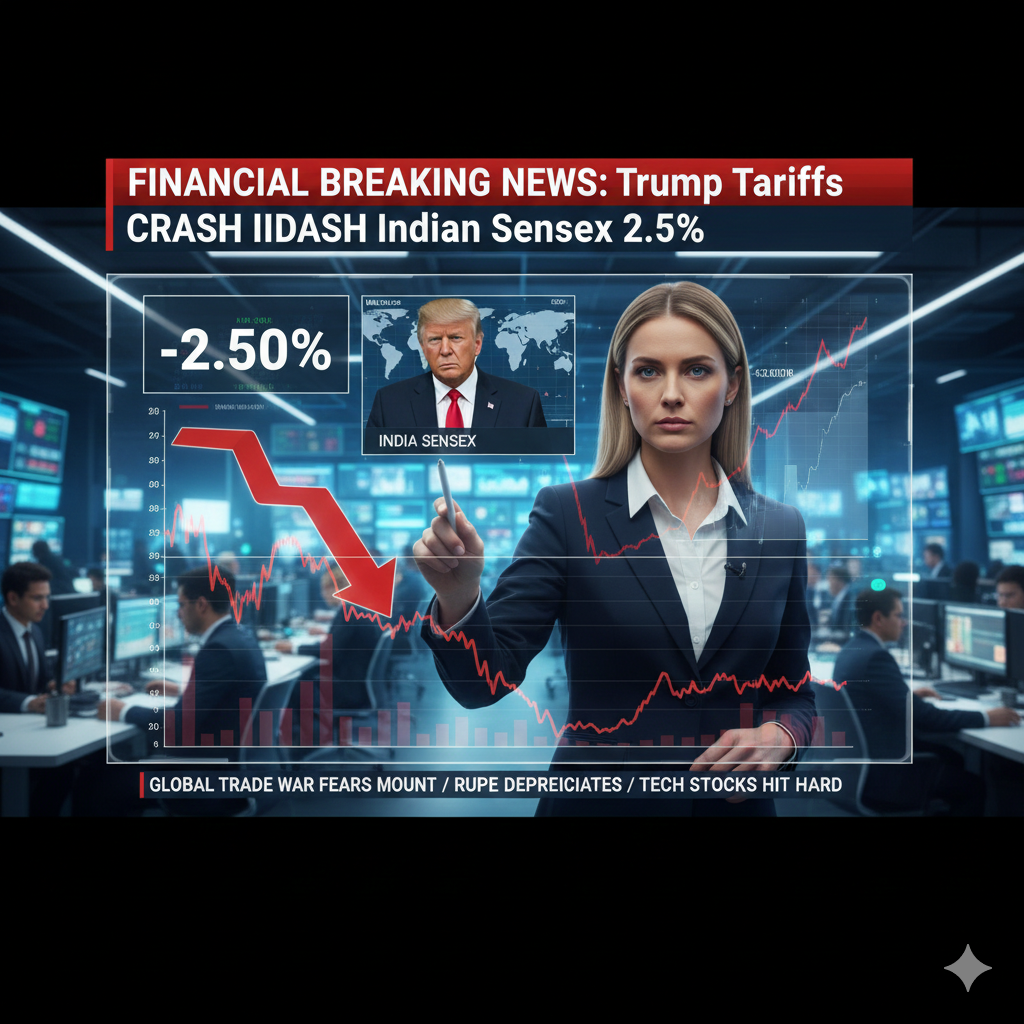
Financial breaking news has dominated global headlines today, January 12, 2026. The Indian Sensex plunged 2.5% after Donald Trump announced sudden tariffs on Indian exports. This shockwave rattled investors worldwide, despite India’s strong GDP growth of 7.4% and cooling inflation at 1.5%. In this comprehensive blog post, we’ll explore the causes, consequences, and opportunities hidden within this crisis, providing readers with a detailed analysis of the most searched financial story of the day.
Financial Breaking News: What Happened Today?
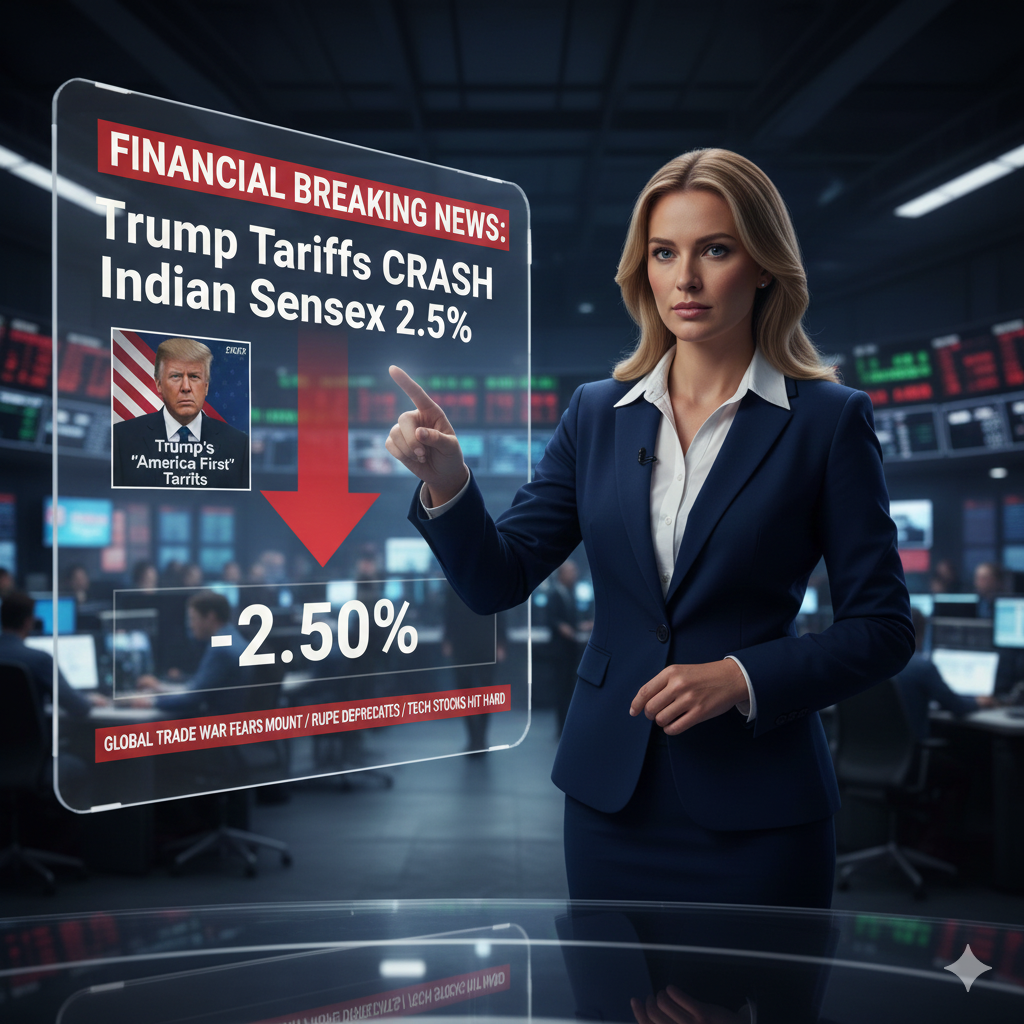
The Indian stock market faced one of its sharpest declines in recent months.
- Sensex dropped 2.5% to 83,576 points.
- Nifty 50 fell sharply to 25,683.
- Trigger: Trump’s tariff announcement targeting Indian exports.
- Result: Foreign portfolio investors (FPIs) pulled out funds, accelerating market volatility.
This sudden move has created panic among traders, but the underlying fundamentals of India’s economy remain strong.
Financial Breaking News: Global Ripple Effects
The tariff shock is not limited to India.
- Emerging markets are under pressure due to trade uncertainty.
- Oil prices volatile as geopolitical tensions rise between the US and Venezuela.
- Central banks in developed economies signal tighter monetary policy.
- Investor sentiment remains fragile worldwide.
Global investors are now reassessing risk exposure, leading to heightened volatility across multiple asset classes.
Financial Breaking News: India’s Economic Strength
Despite market panic, India’s fundamentals remain resilient:
- GDP growth: 7.4% (among the highest globally).
- Inflation: 1.5%, showing resilience in domestic demand.
- Sector resilience: IT and renewables continue to perform well.
- IREDA profits: Up 15%, positioning renewables as a long‑term growth story.
This contrast between strong fundamentals and market panic creates a unique narrative for investors.
Financial Breaking News: Sector Analysis
IT Sector
- Benefiting from global digital transformation.
- Export‑oriented but cushioned by strong domestic demand.
Renewable Energy
- Government incentives driving growth.
- IREDA’s profit surge highlights investor confidence.
Manufacturing & Exports
- Most vulnerable to tariffs.
- Short‑term pain expected until trade negotiations stabilize.
Financial Breaking News: Investor Takeaways
- Short‑term volatility is inevitable.
- Long‑term opportunities lie in IT and renewables.
- Diversification is key to weathering global uncertainty.
- Cautious optimism recommended for investors in emerging markets.
Financial Breaking News: Global Context
The tariff announcement comes at a time when:
- US–Venezuela tensions are escalating.
- Global inflation remains above central bank targets.
- Foreign portfolio outflows are weakening emerging market currencies.
This makes the Indian market crash not just a local event, but a global financial story.
Financial Breaking News: Opportunities Amid Crisis
- Renewables: Strong government support and rising demand.
- IT services: Continued global digitalization ensures steady growth.
- Domestic consumption: India’s large middle class provides resilience against external shocks.
Investors who can look beyond short‑term volatility may find attractive entry points.
FAQs on Financial Breaking News
Q1: Why did the Sensex crash today? A: The crash was triggered by Donald Trump’s sudden tariff announcement on Indian exports, leading to foreign investor outflows.
Q2: Is India’s economy still strong despite the crash? A: Yes. India’s GDP growth is 7.4% and inflation is low at 1.5%, showing strong fundamentals.
Q3: Which sectors are safe for investment now? A: IT and renewable energy sectors are showing resilience and long‑term growth potential.
Q4: How do global tensions affect Indian markets? A: Geopolitical issues like US–Venezuela tensions and global inflation add uncertainty, impacting investor sentiment.
Q5: Should investors panic? A: No. While short‑term volatility is high, India’s economy remains strong, and opportunities exist in resilient sectors.
Conclusion
Financial breaking news today highlights the fragility of global markets in the face of political shocks. Trump’s tariffs have rattled investors, causing a sharp Sensex decline. Yet, India’s strong GDP growth, low inflation, and resilient sectors like IT and renewables suggest that the long‑term outlook remains positive. For investors and readers alike, the lesson is clear: volatility creates opportunities, and staying informed is the best way to navigate uncertainty.
Affiliate & Legal Disclaimer
This article relies on internal data, publicly available information, and other reliable sources. It may also include the authors’ personal views. However, it’s essential to note that the information is for general, educational, and awareness purposes only—it doesn’t disclose every material fact. This analysis is for informational purposes only and does not constitute financial advice. Consult a professional before making investment decisions. This article contains affiliate links from Amazon and ClickBank. If you purchase through these links, we may earn a commission—at no extra cost to you.
We publish information on World Virtual CFO in good faith, solely for general information. World Virtual CFO doesn’t guarantee the completeness, reliability, or accuracy of this information. These are our views for informational purposes. When you use our website, know that any action you take is entirely at your own risk. World Virtual CFO won’t be liable for any losses or damages connected to your use of our website. For detailed information, refer to our disclaimer page.

Dr. Dinesh Sharma is an award-winning CFO and AI strategist with over two decades of experience in financial leadership, digital transformation, and business optimization. As the founder of multiple niche platforms—including WorldVirtualCFO.com—he empowers professionals and organizations with strategic insights, system structuring, and innovative tools for sustainable growth. His blogs and e-books blend precision with vision, making complex financial and technological concepts accessible and actionable.